


On the FUEN website there are links with other websites.
We draw attention to the fact that we have no influence on the contents of these sites!


PRESS RELEASE
No. 19 - 33 / 2001

FUEN-Now Actuel
No. 75 / 2001-04
No. 76 / 2001-06
No. 77 / 2001-11
No. 78 / 2001-12

Resolutions
Heerenveen NL 2001

Documentation
Heerenveen 2001


No. 76 / 2001-06

46th FUEN Congress of Nationalities in Heerenveen
Opening speech by Romedi Arquint, FUEN President

I am delighted to welcome you all to the 46th FUEN International Congress here in Heerenveen.

In the article defining the purpose of FUEN, founded more than 50 years ago, is the following sentence: The FUEN aims to preserve ethnic particularities, language, culture and vital rights of European nationalities.

The first year of the new millennium thus sees the topic: Where do we now stand in Europe as regards this objective? What has been achieved?
What remains to be done?

I have taken the trouble to research the term 'national minorities' in a number of encyclopaedia. It is interesting to find that the German dictionary of 1885 is not yet familiar with this connotation and only states the following under the word 'minority': condition of being minor (in number, extent or dignity). The new Encyclopaedia Britannica of 1985 concisely expresses it in a sober English manner: necessarily subordinated to the dominant group within a society. According to the Enciclopedia Italiana, the expression has been common since the First World War.
The so-called Wilson Declaration cemented the idea of the nation state on the international political front that is based on one language, culture, history and mentality and the principle of sovereignty of such state forms. What was controversial was the wide gap between ideology and reality, which began at the same time as the declaration was made (for example the division of Hungarians into various states) and which continued with the Second World War (like allocation of South Tyrol to Italy).

With the nation state, the status of a person living in such a state with a different language and mentality was confirmed as a waste product: they became national minorities. Language is always a tool of rulers. Serving nationalism ideology, the idea of lingual variety and the wealth of diversity was degraded into a formula of the state nation, i.e. the national minority, which is associated with negative factors and ultimately can be reduced to a question of quantity.

Lithuanian author Abraham Sutzkever formulated the power of language as follows: 'Go through words as you would go through a minefield; one wrong step, one wrong movement and all words . . . will be ripped to pieces with you'.

In zoology and botany, areas where there is no political pressure, it could not be imagined that rare species of animals or plants might be referred to as minorities. In this respect we speak of the diversity of species that is to be preserved, and it is pointed out that this diversity for nature and the environment relies on mutual dependency and fruitfulness; rare species of animals are highly respected and all imaginable measures are undertaken to provide them with favourable conditions. Diversification is a fundamental principle, the basis for evolution and a sign of vitality in nature.

Applied to languages: there are more than 6,000 languages worldwide, of which one-third are endangered smaller languages. This means for Europe: the population in Europe of 767 million comprises 87 peoples living in 36 states (not including those numbering less than 1 million). Only 11% of the languages have more than 1,000,000 native speakers. The 53 stateless languages are integrated in nation-state structures, which make them just as much minorities as minorities which have a 'king state'. In the majority of cases, neither community finds ideal conditions for development.
To classify this diversity as the formula 'national minority' only becomes possible through enormous pressure from the ruling ideology. To mould this into nation-state structures and care for it like a national flower in a state park suppresses and suffocates it, it becomes a dry, lifeless flower in a herbarium.

I spoke of the national minority as a waste product. I would like to go even further and declare this word, here and today, as the
WORST WORD OF THE CENTURY. The term 'national minority' is the shadow that fits the ideology of nationalism and accompanies this, and it contributes to the discussions and approaches to solutions which restrict and narrow the aspect it is seen from. Nation-state ideologies cannot be overcome
without overcoming the regulation of language for the small lingual and cultural communities, and this is only possible if private and public consciousness can be changed. The basis is to rediscover and positively interpret diversity!

Currently 'the job from 1918 is being finished' (Hobsbawm); 'separate what should later grow together' (Ash). And the Hungarian Imre Kertesz: 'Who would have thought that the so-called 'gentle' revolution would turn out to be a time machine for Eastern European states, that moves not forwards, but backwards with them, and that their children's games are taken up again at that stage around 1919 where they were previously ended?' Focusing of the public on the outbreaks in Eastern Europe and in the Balkans with a measure of brutality and violence that many cannot envisage is impermissible.
One glance at the part of Europe that has allegedly exited its infancy show that here, too, the basis for positive and active promotion of the diversity still remains in shambles. Such states with centralist structures have trouble even recognising the existence of lingual and cultural differences. Bloody disputes have been kindling and breaking out for decades; solutions are hardly in sight. In other laces, a more comfortable nationalism leads to sympathy for this diversity as long as it does not cost anything to observe it and leave them to their fate; it can very quickly give rise to racist slogans expressing a hate for foreigners.

Europe will have a future when we first of all change our minds and not only thrust on constitutions and laws, in international conventions, of what the vision and aim of Europe could be: equality, mutual dependence, enrichment, which the lingual and cultural, the religious and mentality-linked 'diversity of species' has brought to our continent and could again bring. But to achieve this, we must finally depart from the idea that this diversity can only be cultivated in an isolated state garden in monoculture. This is the essential basis on which Europe can again grow together.

Ladies and Gentlemen,
Anyone who does not understand the past cannot comprehend the present nor design the future. I hope that our congress will provide impulses and directions for action on how the correct lessons can be learned from the past, how the present can be better understood and how work on the building site for the new Europe can be better carried out. With this, I would now like to declare the 46th international congress in Heerenveen open.


The Frisians in the Netherlands and Germany

Even Roman historian Pliny felt he had to mention this people on the
North Sea. He speaks of people who, already at that time, had to adapt
to an inconvenient environment dominated by constant floods due to the
tides coming in and out, and who had to build their houses on artificial
hills for protection. They are also frequently mentioned in the early
Middle Ages and their significance as seafaring merchants was so great
that the North Sea was named after them as 'Mare Frisicum'. Their
settlement area stretched along the coast of the southern North Sea from
the Rhine delta to the estuary of the Weser. Not until much later was
the western coast of southern Schleswig settled (German-Danish border
region). A united state existed very infrequently, the Frisians were far
more distributed in numerous smaller states and so-called 'tribes'
which, for some time, were united in the alliance of the 'Seven Sea
Countries'. Today, half of the Frisians live in the Netherlands and the
other in the Federal Republic of Germany. They are classified into West,
East and North Frisians. They are all united in the so-called Frisian
Council.


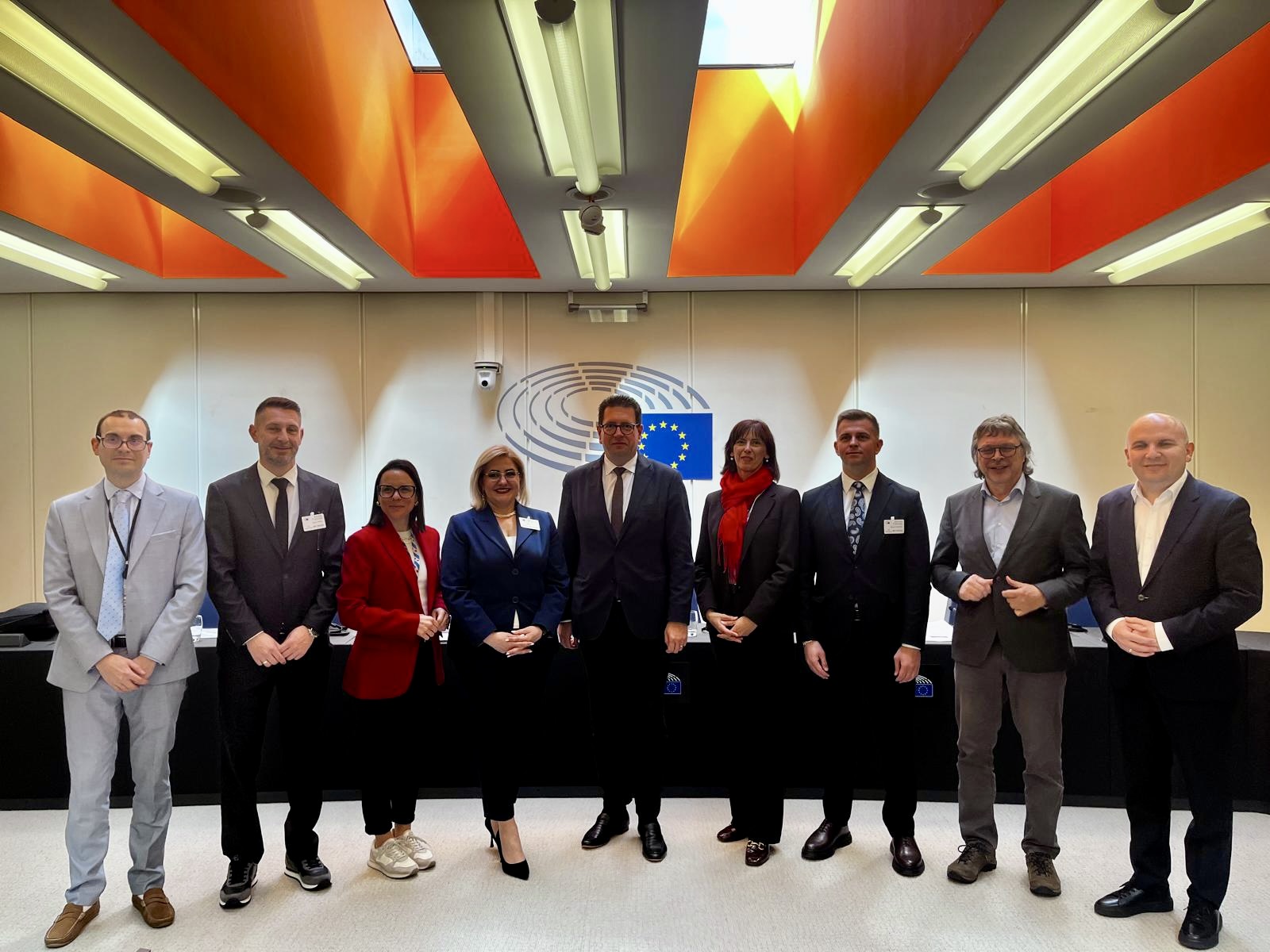
FUEN President Romedi Arquint (3rd from left) at Ried fan de Fryske
Beweging


The West Frisians
(Wester-lauwerske Frisians)

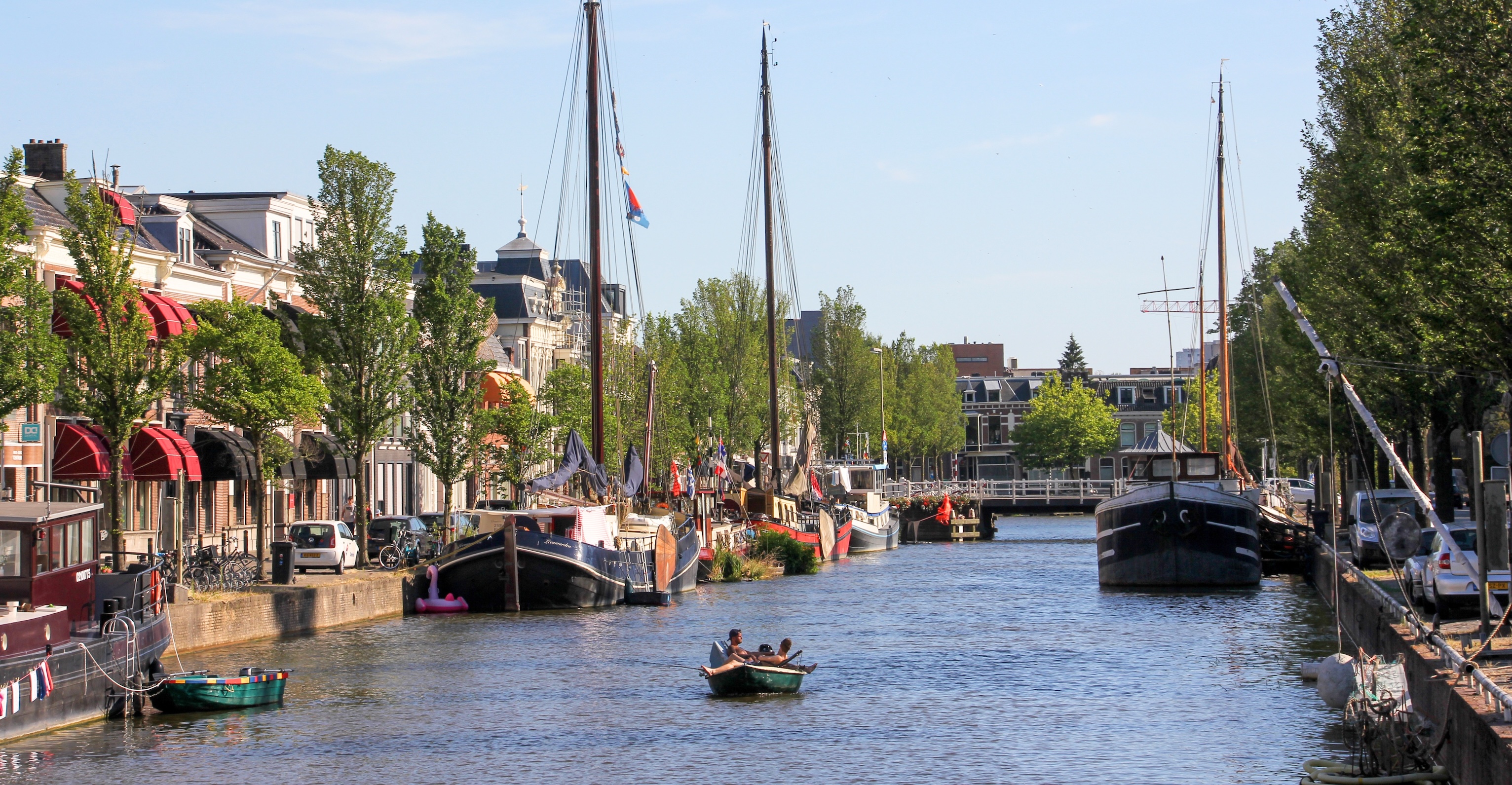
The West Frisians live in the northern part of the Netherlands in the province Fryslân/
Friesland. Of the approxi-mately 600,000 inhabitants, around 350,000 speak the Frisian language, over 90% of the population can understand it. The chief source of income is, as in the other Frieslands, tourism and agriculture. The Frisians are a recognised minority and their language is the 2nd official language in the province. The situation of the West Frisians is thus relatively favourable as compared to those living in Germany. The regional TV and radio station 'Omrop Fryslân' broadcasts almost completely in Frisian. There is also a 2-hour weekly programme in Frisian that is broadcast nationally. Frisian however appears rarely in print in the mass media. All dailies are written in Dutch, but now and again there are smaller features in Frisian. One of the reasons for this is the high number of illiterate persons. Approximately half of those who speak their language cannot read it, far fewer can write Frisian. This situation has only been improving since 1955 when schools were allowed to teach and teach in Frisian. Despite this, there is a wealth of high-class literature which is unusual for a minority language which is becoming more and more popular. To preserve and document the Frisian culture, the Fryske Akademy was established before the last world war in the provincial capital of Ljouwert/Leeuwaarden as a central scientific establishment. Political representation is ensured by the Frysk Nasjonale Party (FNP) (Frisian National Party) but it has received votes from only a small proportion of the ethnic group in the past. One of the largest cultural associations, the Ried fan de Fryske Beweging, is a full member of FUEN and is hosting this year's FUEN Congress on Nationalities.

The North Frisians

The North Frisians' settlement area is the western Schleswig-Holstein coast between the rivers Eider and Wiedau, and the islands off this coast. Settlement took place in two stages: the islands Föhr, Amrum and Sylt were settled in the 8th century (recent excavations possibly provide proof of earlier settlement), today's mainland and the flat marsh and other islands around 1000 AD by Frisians from today's West and East Friesland. These various processes are today still reflected in the numerous dialects. Of the approx. 150,000 in the district of North Friesland 8,000 to 10,000 speak the Frisian language, twice as many are able to understand it and approximately 50,000 refer to their origins as North Frisians. North Frisian currently comprises 9 main dialects with Island North Frisian (Föhr, Amrum, Sylt) and Mainland North Frisian being two different ones. These two chief groups were barely able to communicate in Frisian with each other for a long time, which is why Low German, and today High German, was frequently used. There is no High Frisian language which applies to all speakers so that all publications have to be printed in several dialects. The language rarely appears in the mass media. The North German local NDR TV and radio station broadcasts 3 minutes in the Frisian language per week although for TV this rarely happens regularly. The 'ferian för en nuardfresk radio' (Society for North Frisian Radio) founded two years ago is campaigning for its own Frisian radio station, although this is not likely to appear over the short or medium term. Frisian is offered as an optional subject at school virtually throughout the territory, but is limited to the 3rd and 4th school years. Frisian or Frisian Language and Literature is offered at both universities in the region, but has only been represented in Flensburg by one honorary professor for some time now. Aims to preserve the North Frisian identity were continually thwarted particularly by the German-Danish border conflicts. A decision had to be made in favour of Germany or Denmark; the Frisians' own viewpoint was rarely accepted. The two main North Frisian organisations, the previously more Danish-oriented Foriining for nationale Friiske (Association of National Frisians) and the more pro-German Nordfriesische Verein (North Frisian Society) were marked by this. However, they are both united in the Frisian Council, North Section, and the Verein nordfriesisches Institut, which maintains the Nordfriisk Instituut, the North Frisian version of the Fryske Akademy. Both the Foriining for nationale Friiske and the Nordfriesischer Verein are full members of FUEN.


This year's FUEN Congress on Nationalities will be taking place from 23/27 May 2001 in Heerenveen/Netherlands. For this, an FUEN delegation comprising West Frisian Wiebe Lageveen (centre), North Frisian Gary Funck (left) and FUEN Secretary Frank Nickelsen travelled to The Hague for talks with the Dutch government. The FUEN delegation was received by West Frisian Mr Auke van der GOOT (right), from the Ministry for Interior Affairs.


The East Frisians

In the actual area of East Frisia, East Frisian died out centuries ago; only in the Saterland community of the Oldenburg region could the language remain alive still today thanks to immigrant Frisians. Of the 10,000 inhabitants, roughly 1,500 people speak Sater Frisian. The language is particularly uncommon among young people. Despite this, Frisian has recently been offered at kindergarten and at school, the result of work by a few honorary volunteers. Apart from the local history society Seelter Boun, a small youth group could be founded two years ago which obtains a great deal of support from West Frisia. In East Frisia, High German as well as a Low German based on rudimentary Frisian are spoken. This, however, is still referred to by its speakers
as Frisian. A certain feeling of individuality remains in existence in the region.