




On the FUEN website there are links with other websites.
We draw attention to the fact that we have no influence on the contents of these sites!


PRESS RELEASE
No. 19 - 33 / 2001

FUEN-Now Actuel
No. 75 / 2001-04
No. 76 / 2001-06
No. 77 / 2001-11
No. 78 / 2001-12

Resolutions
Heerenveen NL 2001

Documentation
Heerenveen 2001


No. 75 / 2001-04


Macedonia and the West's neglect

The Federal Union of European Nationalities (FUEN) is deeply concerned about recent developments in Macedonia. Until now, Macedonia has been able to avoid violent ethnic conflicts. The ethnically mixed region has been able to take the initial steps towards peaceful coexistence and establish these politically. The Albanian minority has been granted comprehensive minority rights. They have been taken into consideration by the government since 1991; they have retained the status as a minority and not a state people, some of the Albanians have retained the feeling of being economically and politically underprivileged, second-class people. Apart from the Albanians, it is chiefly the Roma people who have to suffer from strong discrimination. The very sensitive movement of Macedonia towards stability has only been supported and promoted by the west with hesitation, although the international community was dependent on Macedonia when seeking a peaceful solution in Kosovo.

That primarily Albanian extremists from Kosovo are today attempting to destabilise Macedonia, that people with an ethno-nationalistic attitude and weapons are crossing the border into Macedonia, that they are interested in a civil war in Macedonia and are kindling polarisation, is beyond doubt.

In this situation, a clear reaction from the international community is imperative. The border between Kosovo and Macedonia must be secured with military forces to stop the infiltration of violence. Otherwise military intervention must also be considered in the tense regions of Macedonia. This comes with an increased risk also for the military troops deployed, but it has to be initiated if efforts towards peace are to be credible. Politically, all measures should be asserted that are suitable to ease the situation. The west must now provide sound evidence of its strategy to prove that its intention is not to involve the multi-ethnic state of Macedonia in war. Any hesitation could kindle a new and uncontrollable source of war.


FUEN Presiding Committee in Strasbourg

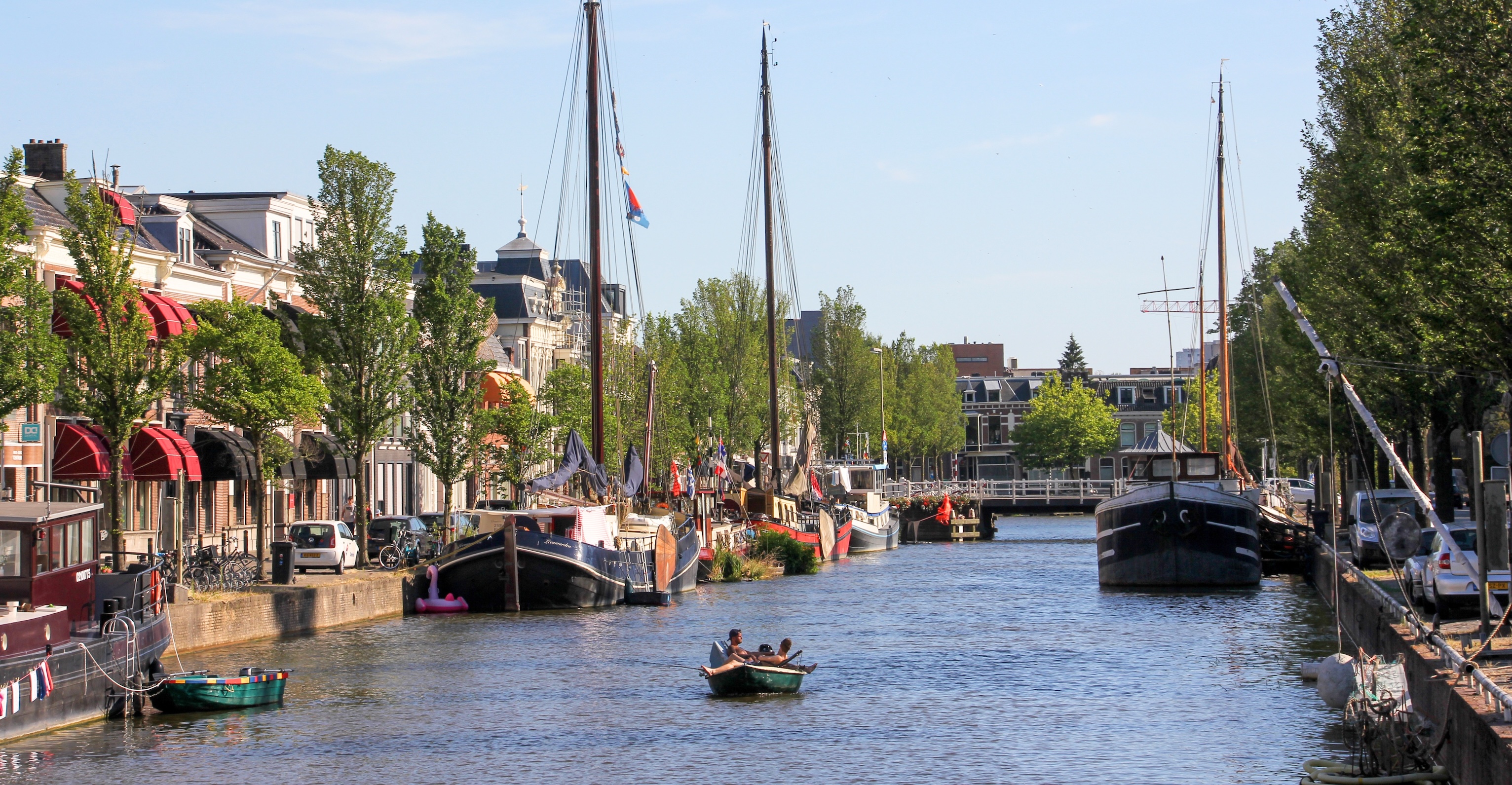
While the Parliamentary Assembly of the Council of Europe was taking place in January, the FUEN Presiding Committee convened in Strasbourg. In addition to other points on the agenda, preparations for the 46th FUEN Congress on Nationalities in Leeuwarden from 23 to 27 May 2001 were one of the main topics. One focus will be to take critical stock of the policy regarding national minorities in the western states of Europe. Heerenveen and the Netherlands will be a welcome opportunity for the OSCE High Commissioner for National Minorities, Mr Max van der Stoel, to look back on his work before handing over his office.
The Presiding Committee noted with satisfaction the initiative of the Parliamentary Assembly of the Council of Europe to again take up their work to improve minority protection. FUEN has always emphatically called for them to resume work on a supplementary protocol for the European Convention on Human Rights which has been put aside for too long. Without a binding definition of national minorities, flexible provisions with a series of rules governing exceptions or a binding interpretation this has so far prevented effective minority protection in Europe.


FUEV-Delegation in Bonn

During the meeting of the Presiding Committee in Strasbourg, President
Romedi Arquint and Vice-President Hans Heinrich Hansen took the opportunity to
call upon heads of the dept. SH II 7, Ministry Director Klaus Pöhle,
head of the sub-dept. responsible Ministry Director Frank Willenberg and
head of the Office for Minority Rights, Ministry Delegate Dr Detlev Rein
and the head and staff of the departments responsible for the welfare of
German minorities in Central and South-Eastern Europe to exchange
information.
The Federal Ministry of the Interior has promoted FUEN for a number of
years with selected projects and events.


European year of languages

During the second phase of invitation for projects for the European year of language, the EU Commission registered around 1,000 new applications. This figure is far above the result of the first invitation phase last October. As a budget of only ¤3 million is available, strict selection has to be expected. Decisions on the project proposals received will be taken in April and the projects chosen may begin from June 2001. FUEN has also suggested a project that is primarily concerned with ethnic groups without their own state (Welsh, Sorbs, Frisians, etc.).


FUEN participation in book project on the minority situation in the German, Danish, Frisian border region

The minority region along the German, Danish and Frisian border will soon be described in a book. A few days ago, the second round-table meeting convened to elucidate content, targets and methods at the European Centre for Minority Issues (ECMI: http://www.ecmi.de) in Flensburg. Apart from the organisers, representatives of the Danes in Germany, the Germans in Denmark, the Frisians, the Sinti and Roma of Schleswig-Holstein, FUEN and the state government of Schleswig-Holstein also attended
(> see photo).


Within the project, FUEN will be taking on the task of illustrating the relationships between the minorities in the border region as well as other minority regions in Europe.
The book will be written in the English language and is due to be published in June 2001.


Meskhets in Georgia

An uncertain future for one of the last deported peoples who are not being allowed to return to their home

In view of the monitoring process of the Council of Europe Georgia is obliged to provide the legal basis for the return of the Meskhets deported from Georgia by Stalin in the Second World War and to initiate sound initial steps. Many voices in Georgia are unfortunately still prejudiced and distrusting regarding this Muslim nationality, and attempts are being made to get around clear legal bases and delay their return or even prevent this with bureaucratic and other measures. Gouram Mamulia, head of the Repatriation Office and whose proposal for a bill was torpedoed, has taken the according step and resigned from his office. It is hoped that the Council of Europe will insist upon a sound and clear legal basis for providing a fundament for a solution to the Meskhet issue. (More information FUEN FFM report on Georgia 2000)


Improvement in minority rights in Romania

The two chambers of the Romanian Parliament approved a new law on municipal administration at the beginning of March. According to this, national minorities may use their native language at authorities if their proportion in one district amounts to at least 20 per cent. In addition municipal administration is to be generally decentralised and given more autonomy.


Latvia released from monitoring process

Early in the year, the Council of Europe released Latvia from its
monitoring process, recognising Latvia's efforts to reform, not least in
how it considers national minorities. Primarily, the rights to language
and citizenship were relaxed in 1998 so that today, an average of 1,000
applications for citizenship per month are received. Age restrictions
for applicants have been abolished and children born since 1991 have
automatically become Latvian citizens.


Rolf Ekeus new High Commissioner for National Minorities

The OSCE Council of Ministers has appointed the successor to Max van der Stoel, who will be vacating the office as High Commissioner for National Minorities (HCNM). This is to be Rolf Ekeus. The Swedish diplomat was Executive Chairman of the Special Commission of the United Nations for Iraq (UNSCOM) from 1991 to 1997 and subsequently Swedish ambassador in the United States.

Rolf Ekeus (Photo CNN)


OSCE Mission Office in Belgrade

The present Chairman of the OSCE, Romania's Foreign Minister Mircea Geoana officially opened the Belgrade Office of the OSCE Mission in Yugoslavia on 16 March. At an inauguration ceremony also attended by Yugoslavia's Foreign Minister Goran Svilanovic and the General Secretary of the Council of Europe, Walter Schwimmer, the flags of the OSCE and the Council of Europe were hoisted in front of the building, which unites both representations under one roof.


New minority institute in Carinthia

The Carinthian Institute for Ethnic Minorities (CIFEM) took up its work in Villach (Austria) last autumn. The CIFEM will be dealing with general minority issues in its research and teaching projects and in particular with the problems of European minorities.
Contact: http://www.cifem.at


World Roma Festival

The 'Khamoro 2001' World Roma Festival will again be taking place in Prague from 22 to 26 May 2001 and is dedicated to Roma all over the world. Apart from speeches and scientific discussions about the situation of the Roma in various states, a number of cultural events have also been planned.


10 years of the Cultural Society of Austrian Roma

To celebrate this 10th anniversary, the cultural society will be extending an invitation to an exhibition of pictures and documentation.
Opening: 2 May 2001, 6 p.m. at the documentation and information centre, Devrientgasse 1, in Vienna.The exhibition can be visited from 3 May to 29 June 2001.

Contact: http://members.eunet.at/kv-roma


New law on the protection of the Slovenian minority in Italy

Italian has passed a new law governing the protection of the Slovenian minority. It puts the Slovenians and other ethnic minorities on an equal level and takes effect in the provinces Triest, Gorizia and Udine. Slovenia's President Kucan expressed his satisfaction about this and referred to the step as a sign of Italy's worldliness and orientation to the future.


»Skånsk Framtid« visits FUEN Secretariat

In mid-March the FUEN Secretariat in Flensburg received a visit from Ms Lisa Staeves, representing the 'Skånsk Framtid' foundation (Scanians in Sweden) within FUEN.


FUEN, represented by its Vice-President Hans Heinrich Hansen and Executive Secretary Frank Nickelsen, took the opportunity to draw the attention of the foundation's representative to FUEN's current programme and the fact that the so-called FUEN Committee for the 46th Congress on Nationalities in Heerenveen, set up in June 2000, has also invited the Scania region.


Germans in Yugoslavia take stock

The community of Germans in Yugoslavia, 'German Society, Danube' look back on 2000 as a year full of work. Apart from cultural events like language courses, speeches and concerts, the society was able to help its members with the issue of visas and leaving the country for the Federal Republic. It is particularly working on an amendment to the German law governing late emigrants so that the Germans from the rest of Yugoslavia may also be recognised as German citizens without any problems, as Chairman Andreas Bürgermeyer comments. A committee has recently been founded to concern itself with compensation for expropriation and persecution for the German ethnic group in order to be able to actively help members affected in the future.


Istro-Romanian congress in Pola (Croatia)

The first congress of the Istro-Romanians took place in spring 2000. Organised by the cultural association Andrej Glavina, the Faculty of Philosophy (where incidentally, the first course in Romanian at a Croatian university has been introduced) and the regional authorities of Istria. Guests participating in the congress were representatives from authorities and the parliament of Romania as well as the Romanian ambassador in Croatia, members from Croatian Ministry of Education authorities, the Director of Radio Rumania International, representatives of the Istro-Romanians in the USA, among others.

Apart from discussing linguistic, cultural and historical perspectives, there was also the opportunity to visit Istro-Romanian villages like Susnievita and Jeian and have conversations with the inhabitants. The will to preserve the lingual heritage and culture was very clearly expressed and emphasised. The priority now is to apply the protection anchored in law for this old language according to article 17 of the Romanian–Croatian treaty of 1994.


Chairman of the Frisian Council elected

The new Chairman of the Frisian Council, Section North, is Ingwer Nommensen from Niebüll. Nommensen was elected unanimously at the last meeting. His deputy is Harro Muuß from the North Frisian Society.
'The "Foriining for nationale Friiske" expressly welcomes having a person at the head of the Frisian Council who has been active in Frisian work for many years. Ingwer Nommensen now faces a variety of tasks. His most important focus will be to continue to professionalise the work of the Frisian Council,' Jörgen Jensen Hahn, Chairman of the FUEN member association Foriining for nationale Friiske comments.


Friedrich Petrach confirmed as President of VdG

At the Assembly of Delegates of the VdG (Association of German Social and Cultural Organisations in Poland) in October 2000, Friedrich Petrach was confirmed in his office as President. Parliamentary delegate Henryk Kroll was appointed Vice-President. In his subsequent declaration, Petrarch particularly emphasised the significance of contact with the Polish majority as well as youth work.


Greece will abolish religious restrictions

Greek Minister of Justice Michalis Stathopoulos has confirmed that the previous restrictions on freedom of religion for non-orthodox and primarily Evangelical Christians are to be abolished. This could improve the situation for the 200,000 Balkan Romans. This people, related to the Rhaeto-Romans, belongs to both Evangelical churches and the Eastern rite Catholic church.


Russian minorities apply for membership of FUEN

At the 46th FUEN Congress on Nationalities from 23–27.05.2001 in Heerenveen (NL), three Russian organisations and the umbrella organisation of the minorities in Estonia will be applying for associate membership of FUEN on 24 May 2001. FUEN-Now actuel presents a brief portrait of these 4 applicants:


Russian Association in Latvia »Latvijas Krievu Kopiena«

LKK activities focus on protection for the minorities and minority rights in Latvia. Particular problems here involve the law governing language (only Latvian and Lithuanian are officially recognised, while 43% of the population speaks a different native tongue), the law governing education (from 2004 teaching at all upper schools will be solely in Latvian) and
the Latvian law on nationality (approx. one-third of the population, mostly members of minorities, are not allowed to take the Latvia nationality). Although Latvia signed the European Framework Convention on the Protection of National Minorities in 1995, the Latvian parliament refused to ratify it in May last year.
The LKK organises discussions and talks with parliamentary representatives on these topics and supports the activities of other NGOs. This has led to a number of major laws being relaxed. The LKK has approximately 3,000 individual members. It is organised as a federation and comprises the Presiding Committee (President/Vice-President/other members), Assembly of Delegates ('Sobor') and the Assembly of Federal Divisions ('Duma').
The Russian ethnic group is represented in Latvian parliament by several delegates. There are countless Russian-language newspapers and magazines, but these are not published by the LKK. The association, however, does have a homepage.

Contact: http://www.rol.lv
E-mail: rol@rol.lv


Russians in the Ukraine
»All Ucrainian Public Organization Russian Movement«

The main objectives of the 'Russian Movement' is to build up mechanisms to provide an effective solution to the problems of the Russian minority in the Ukraine, to actively participate in parliamentary and local elections and the forming of executive bodies at all levels and to preserve the rights and interests of the ethnic group with the aim of retaining national identity in language, culture and religion.
In recent years, the association's sights have primarily been set on applying the Framework Convention on the Protection of National Minorities in the Ukraine and on ratification of the European Charta for Regional and Minority Languages.
The 'Russian Movement Of Ukraine' numbers approx. 46,000 individual members and 34
associated organisations. Structurally it comprises the Conference, Coordination Council, Presiding Committee and President. There are also a number of youth organisations.
The Russian minority is represented by delegates on a municipal and national level although not by its own party. An association newsletter is published every two months and a homepage is maintained.

Kontakt: http://www.rdu.org.ua rdu@rdu.org.ua
E-mail: rdu@rdu.org.ua


Russians in Estonia

The 'Association of Slavonic and Welfare Organisations', registered in 1992, numbers 16,000 members and comprises 82 individual associations. This Russian cultural institution publishes information literature at regular intervals and is represented in parliamentary political life at both a municipal, regional and national level.

Kontakt: e-mail: klh4@pi.estnet.ee


Estonian Union of National Minorities
Eestimaa Rahvuste Ühendus

The Eestimaa Rahyuste Ühendus is an organisation with approximately 7,000
individual members and several associated organisations. It is structured in the Board (President and 4 Vice-Presidents) and the Assembly of Delegates (22 members). According to the statutes, the Eestimaa Rahyuste Ühendus (ERÜ) involves itself with the cultural, political and socio-economic interests of its members. It assists with implementing and obtaining the rights of national minorities and coordinates the exchange of information between national communities and cultural associations. It helps the national minorities to preserve their cultural identity and supports them when learning the Estonian language and with integration. An information bulletin appears four times per year with features in Estonian, Russian and English.

Kontakt: http://www.ngonet.ee/nationalminorities/htmls/eru1p_eng.htm
e-mail: ery@ngonet.ee